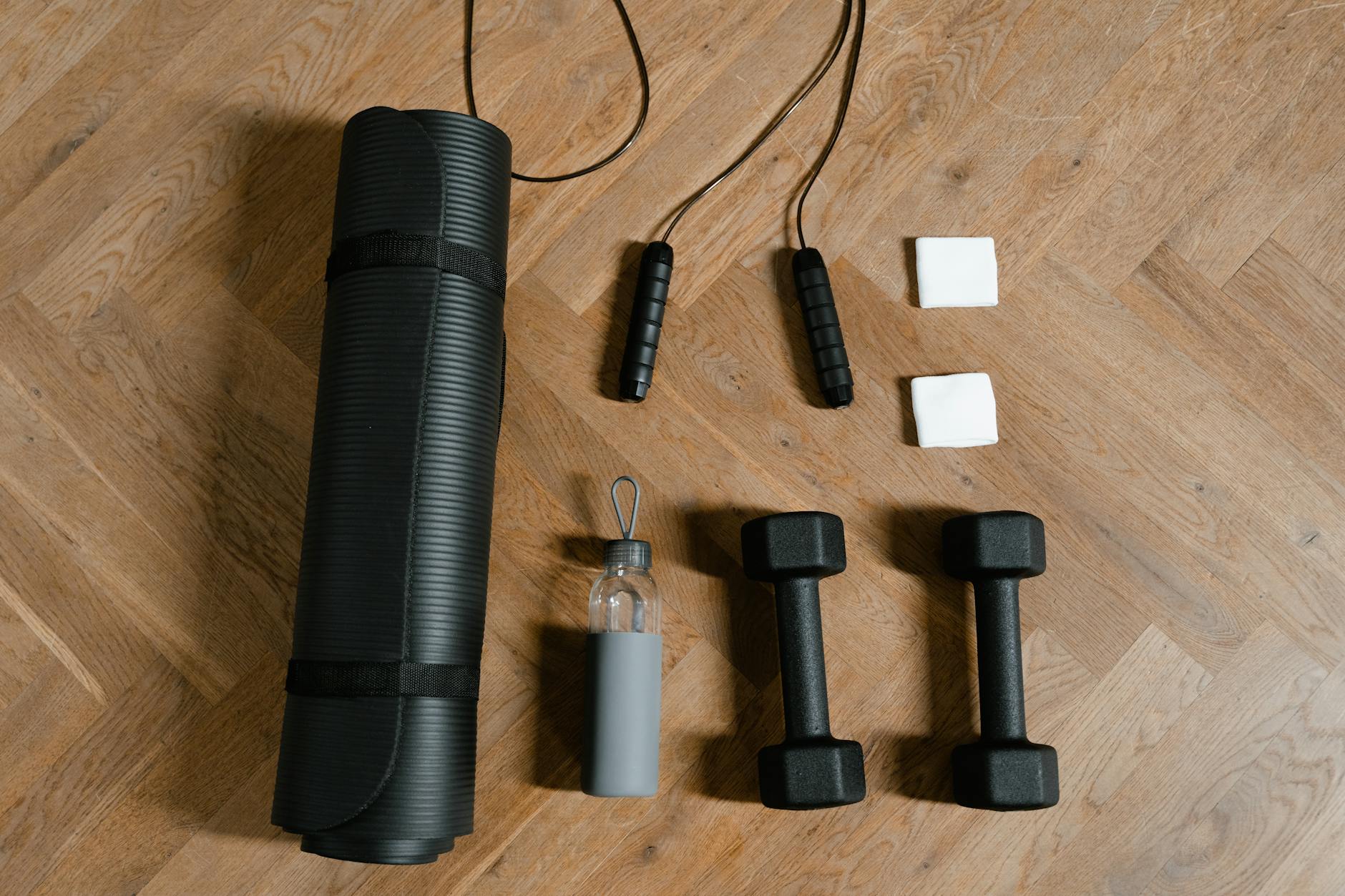
The best no-equipment home workout is a short full-body routine built around five movement patterns (squat, push, hinge, pull or core, and a carry or lunge), repeated two to four times a week, with a clear way to make it harder every couple of weeks. You do not need a new routine each day. You need a small set of exercises you can do well and a plan for progressing them.
Most people who quit home training did not run out of exercises. They ran out of structure. A random video each morning feels busy but makes it hard to tell whether you are getting stronger. This guide shows how to build a routine, how to scale it and how to keep bodyweight training challenging. It is general information, so talk to a clinician before starting if you have a medical condition, are pregnant, or have symptoms such as chest pain or unexplained breathlessness.
Why random circuits stop working
Jumping between unrelated routines gives you variety but no record. If Monday is a burpee video and Wednesday is a yoga flow, you cannot answer the question that matters: are you doing more than you did two weeks ago?
Progress comes from gradually increasing demand. With a barbell that means extra weight. With bodyweight it means more reps, harder variations, slower tempo or shorter rests. A fixed list of exercises lets you track those changes, while a random circuit does not.
Random high-intensity circuits also tend to be heavy on jumping and light on pulling and hip hinging, which leaves the back of your body undertrained. A planned routine fixes that balance.
The five movement patterns to cover
Almost every effective bodyweight routine is built from the same patterns. Pick one or two exercises from each.
| Pattern | Easier option | Standard | Harder option |
|---|---|---|---|
| Squat | Chair sit-to-stand | Bodyweight squat | Split squat, then single-leg box squat |
| Push | Wall or incline push-up | Floor push-up | Feet-elevated or slow-tempo push-up |
| Hinge | Hip bridge | Single-leg Romanian deadlift (no weight) | Single-leg hip thrust with feet on a couch |
| Pull | Towel row against a door frame | Inverted row under a sturdy table | Backpack-loaded row, or pull-ups if you have a bar |
| Core | Dead bug | Plank | Long-lever plank, hollow hold |
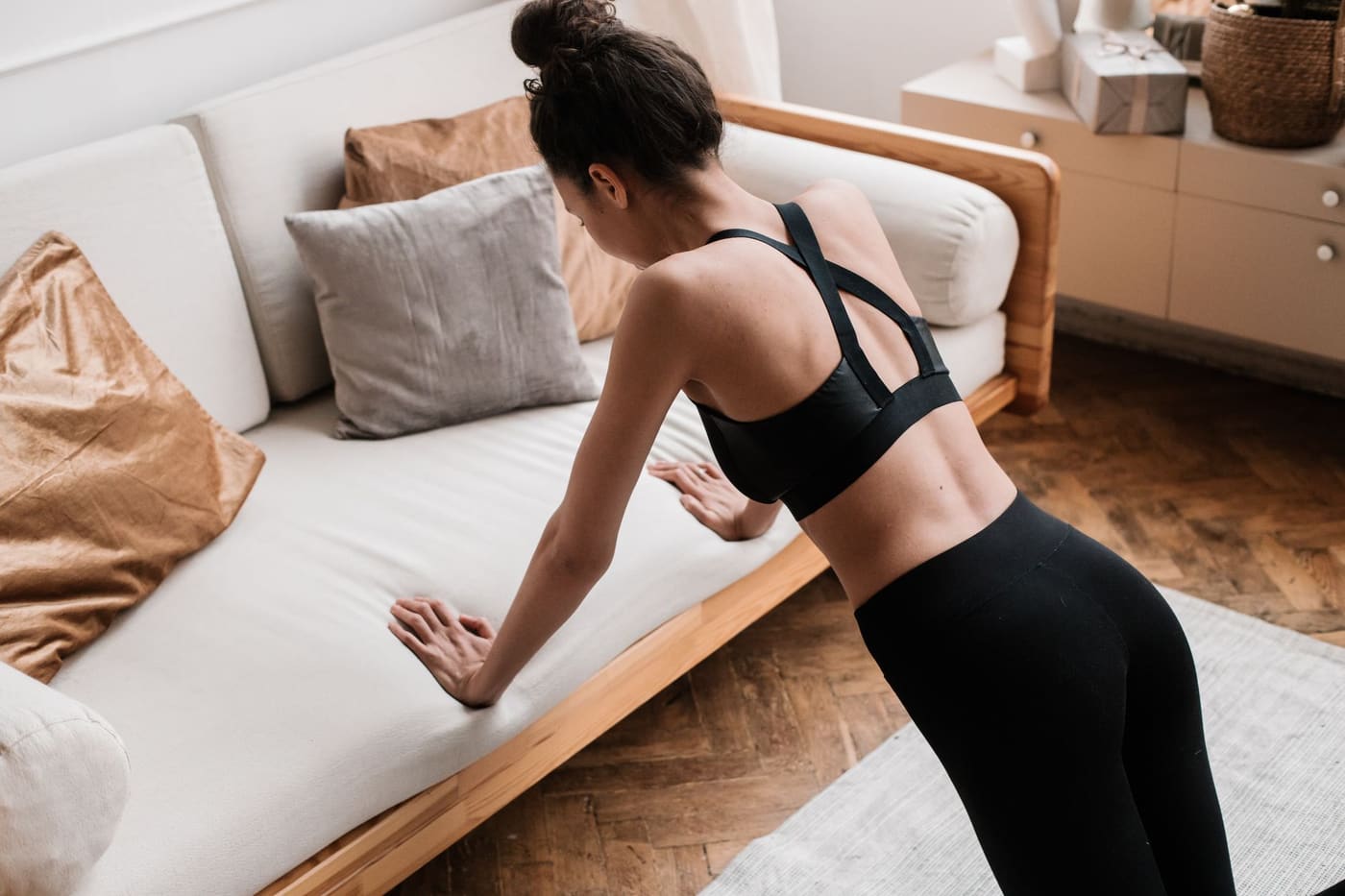
Pulling is the hardest pattern to train at home without equipment. A sturdy table you can lie under, a towel looped around a closed door’s handle (anchored safely), or a backpack filled with books for rows can all work. Check that whatever you pull against is stable before you load it, and skip any version that feels unsafe. If you cannot find a safe way to pull, a doorway pull-up bar is a common low-cost upgrade, though you should follow its weight and fitting instructions.
A simple three-day structure
If you can train three days per week, repeat the same full-body session on non-consecutive days, such as Monday, Wednesday and Friday. Here is a sample session of about 30 to 40 minutes.
- Warm-up (5 minutes): Easy marching in place, 10 arm circles each direction, 10 bodyweight squats, 10 hip bridges and a few slow cat-cow reps.
- Squat: 2 to 3 sets of 10 to 15 bodyweight squats.
- Push: 2 to 3 sets of 6 to 12 push-ups, using an incline if the floor version is too hard.
- Hinge: 2 to 3 sets of 10 to 15 hip bridges or single-leg Romanian deadlifts per side.
- Pull: 2 to 3 sets of 8 to 12 inverted rows or loaded-backpack rows.
- Core: 2 to 3 rounds of a 20 to 40 second plank, or 8 to 10 dead bugs per side.
- Cool-down (3 minutes): Easy walking and gentle stretching of the hips, chest and calves.
Rest about 45 to 90 seconds between sets. If you only have two days, the same session works twice a week. If you want four days, split into an upper-body day and a lower-body day, each done twice. These set and rep ranges are common beginner practice, in line with the approach the American College of Sports Medicine describes for novices, rather than a precise prescription.
How to keep bodyweight training hard
Your body weight does not change when you get stronger, so you have to change the exercise. These are the main levers, roughly from simplest to most advanced.
- More reps. Move from 8 reps to 12 on the same exercise before changing it.
- Slower tempo. Take three seconds to lower into a squat or push-up. Eight slow reps are much harder than eight quick ones.
- Pauses. Hold the bottom position for one to two seconds.
- Shorter rest. Cut rest from 90 seconds to 60, then to 45.
- Harder leverage. Elevate your feet for push-ups, shift to single-leg squats, or move your hands further forward in a plank.
- Added load. A backpack with books or a filled duffel bag adds weight with things you already own. Keep the load snug and the bag closed so nothing shifts.
A reliable method is double progression. Choose a rep range such as 8 to 12. Stay on the same exercise until you can do 12 clean reps on every set, then move to a harder version and start again at around 8.
If counting reps feels fussy, aim for sets that finish with about two reps left in the tank. You should be working hard while your form stays clean. Stopping well short of that rarely produces much change, while grinding every set to failure makes recovery harder than it needs to be.
Where cardio fits
Bodyweight circuits raise your heart rate, but they are mainly strength work. The US Physical Activity Guidelines advise adults to get 150 to 300 minutes of moderate activity a week, or 75 to 150 of vigorous, plus muscle-strengthening work on at least two days. Your home sessions can cover the second part. For the first, add brisk walks, cycling or stair climbing. The article on how much cardio you should do each week explains how to split that time without overdoing it.
If you want a quick finisher after strength work, 5 to 10 minutes of fast marching, step-ups on a sturdy stair or shadow boxing is plenty. Skip high-impact jumping if you live above neighbors or have sore knees. Low-impact options work just as well for most goals.
Setting up your space and schedule
You need roughly the floor area of a yoga mat plus room to stretch your arms. A mat helps with comfort on planks and floor work, but a towel on a carpet works at first.
Two habits make home training stick:
- Fix the time. Attach the workout to something that already happens, such as right after coffee or right after work, so you are not negotiating with yourself daily.
- Write it down. A notes app or paper log with date, exercise, sets and reps takes under a minute and shows progress when motivation dips.
If you are coming back after months of inactivity, begin with one set of each exercise and build up over two to three weeks. The guide on starting to work out again after a long break covers that approach in detail.
Common mistakes
- Doing only push-ups and planks. Without hinge and pull work, your posture and hips lag behind.
- Sagging hips on push-ups. If your lower back drops, use an incline until you can keep a straight line from shoulders to heels.
- Letting knees cave inward on squats. Keep them tracking over your toes and slow the movement down.
- Increasing everything at once. Change one variable, such as reps or tempo, per exercise at a time.
- Skipping rest days. Muscles adapt between sessions, and two or three full-body days with rest between works better than six days of fatigue.
If you later move to a gym, the principles carry over. The best strength training plan for beginners uses the same patterns with added weights.
When to stop and see a doctor
Mild muscle soreness for a day or two after a new routine is normal. Some symptoms are not. Stop exercising and seek medical care promptly for chest pain or pressure, severe shortness of breath that does not settle with rest, fainting or near-fainting, a racing or irregular heartbeat, or sudden dizziness. Call emergency services if chest pain is severe or comes with pain spreading to the arm or jaw, sweating or nausea.
Also get checked for sharp joint pain that persists or worsens, swelling, numbness or tingling that does not go away, or pain that wakes you at night. If you have a heart condition, high blood pressure that is not controlled, diabetes, are pregnant, or have not exercised in a long time and have health concerns, speak to a clinician before starting.
To get your space ready, work through the home workout setup checklist and home workout equipment guide.
Where this comes from
The weekly activity and two-days-a-week muscle-strengthening figures come from the US Physical Activity Guidelines for Americans and the Centers for Disease Control and Prevention’s adult recommendations. Set, rep and progression ranges follow the American College of Sports Medicine’s published approach for new lifters, adapted to bodyweight exercises. The exercise choices and variations are common coaching practice, not formal standards. Guidance is updated over time, so check the current wording at those sources.
This article is general information, not medical advice. Talk to a qualified clinician about your own situation.