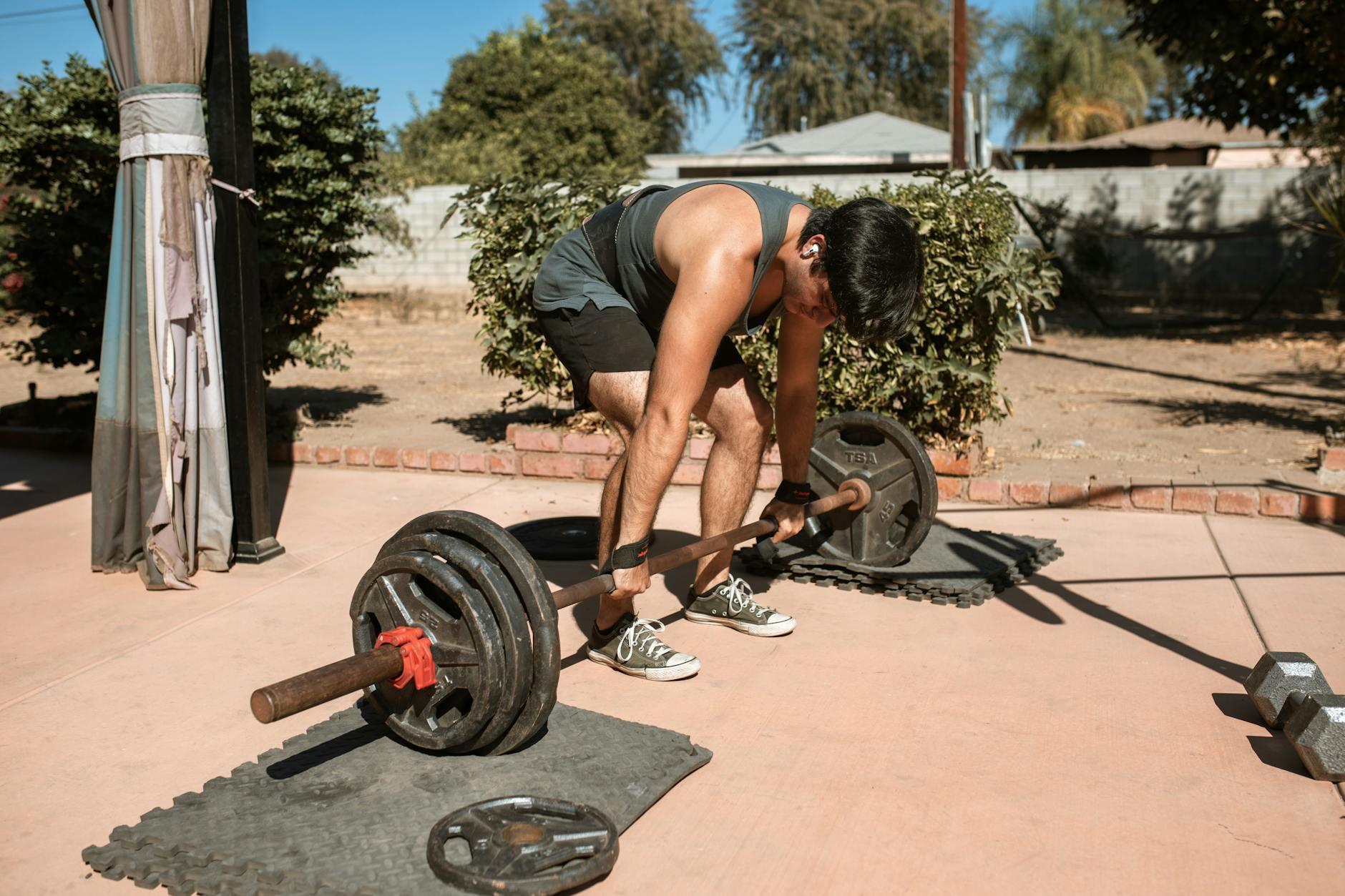
A good beginner strength plan is a full-body routine done two to three times per week on non-consecutive days, built around six or so basic exercises, with 1 to 3 sets of about 8 to 12 repetitions each and small, steady increases in weight or reps. The American College of Sports Medicine describes a similar starting point for novice lifters. It is not glamorous, but it covers every major muscle group, gives you plenty of practice with each movement, and leaves room to recover.
Beginners tend to get the most from repeating the same lifts often and getting better at them. Fancy splits and advanced techniques add complexity without adding much early on. This guide lays out the plan, the reasoning and how to adjust it. It is general information, so talk to a clinician before starting if you have a medical condition, are pregnant, or have symptoms such as chest pain or unexplained breathlessness.
Why simple plans work for beginners
In the first weeks of lifting, much of the early strength gain is thought to come from your nervous system learning to coordinate the movement rather than from larger muscles. That learning needs repetition, so squatting two or three times a week builds the skill faster than once a week in a body-part split.
Simple plans also make progress easy to measure. With six exercises you can log each one and see exactly what changed. A plan with twenty rotating exercises hides your progress behind constant novelty. And a routine that takes 45 to 60 minutes with a clear list is something you can run on a tired Wednesday. Consistency over months matters more than any single exercise choice.
The core movements to include
Cover the main patterns once or twice per session.
| Pattern | Gym example | Home or light-equipment example |
|---|---|---|
| Squat | Goblet squat, leg press | Bodyweight or backpack squat |
| Hinge | Romanian deadlift, hip thrust | Dumbbell Romanian deadlift, hip bridge |
| Horizontal push | Dumbbell or barbell bench press | Push-up |
| Horizontal pull | Seated cable row, dumbbell row | Resistance-band row |
| Vertical push | Dumbbell overhead press | Pike push-up, band press |
| Vertical pull | Lat pulldown | Band pulldown, assisted pull-up |
| Core | Plank, dead bug | Plank, dead bug |
You do not need all of these in every session. Six to seven slots is a good limit. Machines and dumbbells are a fine way to start, since they let you learn the pattern without balancing a heavy barbell.
A sample three-day plan
Train Monday, Wednesday and Friday, or any pattern with a rest day between sessions. Alternate two workouts, A and B, so you do A-B-A one week and B-A-B the next.
Workout A
- Goblet squat: 2 to 3 sets of 8 to 12
- Dumbbell bench press or push-up: 2 to 3 sets of 8 to 12
- Seated cable row or dumbbell row: 2 to 3 sets of 8 to 12
- Plank: 2 to 3 sets of 20 to 40 seconds
Workout B
- Romanian deadlift (dumbbells): 2 to 3 sets of 8 to 12
- Dumbbell overhead press: 2 to 3 sets of 8 to 12
- Lat pulldown or assisted pull-up: 2 to 3 sets of 8 to 12
- Dead bug: 2 to 3 sets of 8 per side
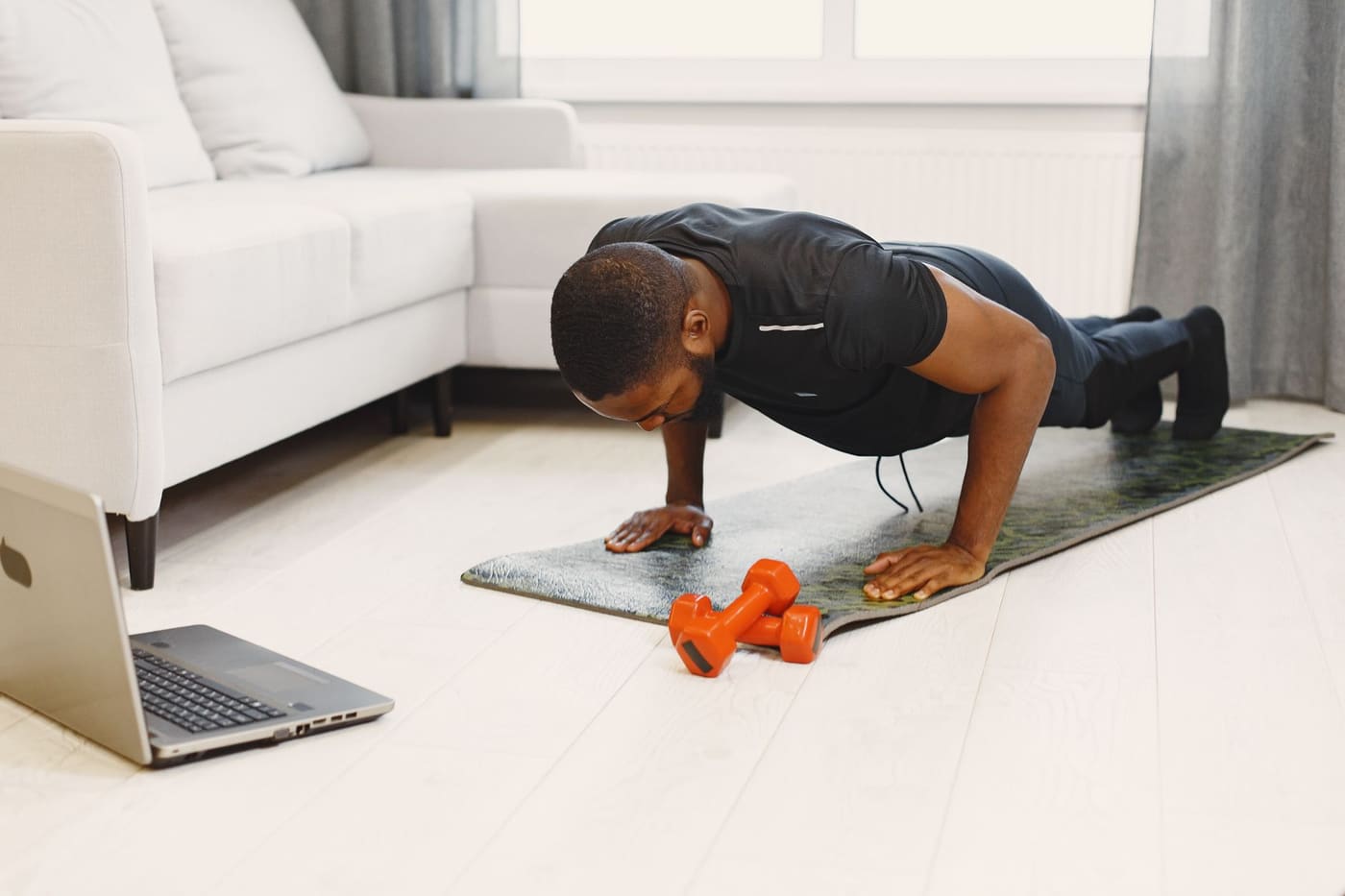
Begin each session with about 5 minutes of easy movement and a lighter warm-up set of the first exercise. Rest roughly 1 to 3 minutes between hard sets, longer if you feel you need it. A session takes about 45 to 60 minutes.
If three days is too much, two full-body days a week still produce good beginner progress. The US Physical Activity Guidelines advise muscle-strengthening activity that works all major muscle groups on at least two days a week, and the CDC repeats that for adults.
How much weight and how hard
Choose a weight that lets you finish each set with about two reps in reserve. If you aim for 10, you could have done 12 with good form. This is often called an RPE of 8 on a 10-point effort scale. The goal is solid work with clean technique, not collapsing at the end of every set.
For your first week or two, go lighter than you think you need. Learn the movement, find your range of motion, and finish feeling you could have done more. Muscle soreness that peaks a day or two after new exercises is normal, but it should not stop you walking down stairs.
Rep ranges of 8 to 12 suit beginners because the weights are heavy enough to build strength and light enough to practice form. Lower rep ranges can come later.
Progressive overload without the jargon
Progressive overload just means gradually doing more over time. A simple method for beginners is double progression:
- Pick a rep range, such as 8 to 12.
- Start with a weight where you reach 8 reps on each set.
- Each session, try to add a rep per set.
- When you hit 12 reps on every set with good form, increase the weight by the smallest jump available.
- Drop back to about 8 reps and repeat.
The ACSM’s position stand suggests raising load by roughly 2 to 10 percent once you can complete one or two reps beyond your target. Because small plates and light dumbbells are not always available, use whatever the smallest step is and stay conservative.
Some weeks you will not progress, and that is normal. Poor sleep, stress and illness all affect performance. If you stall for two or three sessions, check sleep, food and form before changing the plan. If you miss reps repeatedly on one lift, lower the weight a little and build back up.
Write down exercise, weight, sets and reps. A notebook or a free notes app is enough, and it takes a minute.
Recovery, food and sleep
Muscle and strength adapt during rest, not during the session. A few basics support that.
- Sleep: Adult sleep guidance commonly says at least 7 hours a night.
- Protein: Sports nutrition bodies commonly cite roughly 1.2 to 2.0 grams per kilogram of body weight per day for people who train regularly, higher than the minimum needed by sedentary adults. Individual needs differ, and people with kidney disease or other conditions should ask a clinician or registered dietitian before changing intake.
- Total food: Eating far too little makes training harder to recover from.
- Rest days: Leave at least a day between full-body sessions.
Walking, easy cycling and light activity on off days help you feel better and do not interfere with strength gains. The article on how much cardio you should do each week explains how to fit endurance work around lifting.
Gym or home
You can follow this plan in either place. A commercial gym gives you machines and a range of weights, while a home setup with a pair of adjustable dumbbells and a bench covers much of the plan. Costs vary a lot by region and brand, so compare locally before buying anything.
If you are new to commercial gyms, the guide to starting at the gym without feeling lost walks through your first visits. If you are training without equipment for now, the best home workouts without equipment apply the same patterns with bodyweight.
Common beginner mistakes
- Changing the plan every week. Give a routine at least 8 to 12 weeks before judging it. This is common coaching practice rather than a researched rule.
- Lifting too heavy too soon. Poor form under heavy loads raises injury risk and slows learning.
- Skipping the log. Without a record you will repeat the same weights for months.
- Ignoring pulling. Many beginners favor pushing. Match each push with a pull.
- Training to exhaustion every set. Leave a couple of reps in the tank.
When to stop and see a doctor
Muscle soreness and mild fatigue are normal. Stop exercising and seek medical care for chest pain or pressure, fainting, severe breathlessness, dizziness or an irregular heartbeat. Get emergency help for severe chest pain, especially with sweating, nausea or pain spreading to the arm or jaw.
See a clinician for joint pain that is sharp, persists beyond a few days or worsens with training, for swelling, for numbness or tingling, or for sudden sharp pain with a pop during a lift. Dark, cola-colored urine with severe muscle pain and weakness after very hard exercise needs urgent attention. If you have a heart condition, uncontrolled high blood pressure, diabetes, are pregnant, or have other medical concerns, check with a clinician before starting.
To plan small, gradual increases, try the progressive overload planner.
Where this comes from
The set, rep, frequency and load-progression ranges follow the American College of Sports Medicine’s position stand on progression models in resistance training for healthy adults. The two-days-a-week muscle-strengthening advice comes from the US Physical Activity Guidelines and the CDC’s adult activity recommendations. Protein, sleep and the 8 to 12 week rule are common guidance or practice, not fixed standards. Guidance is updated over time, so check the current wording at those sources.
This article is general information, not medical advice. Talk to a qualified clinician about your own situation.