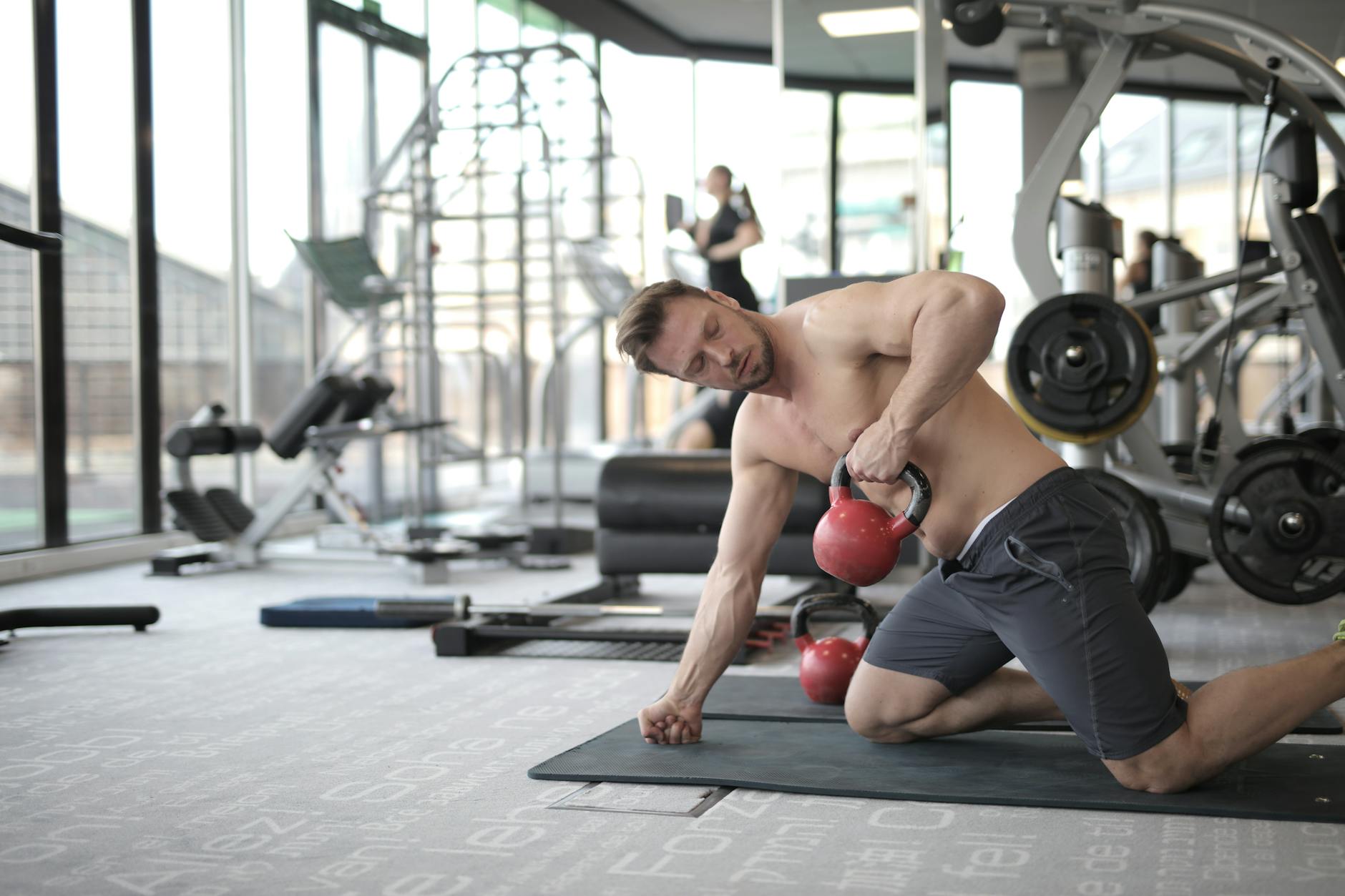
To start going to the gym without feeling lost, walk in with a written plan of five or six exercises, do a short warm-up, use machines and dumbbells you can set up easily, and keep your first sessions to about 30 to 45 minutes. Gym anxiety mostly comes from not knowing what to do next, and a plan removes that problem.
You do not need to know every machine, wear specific clothes, or lift heavy in week one. This guide covers what to do before your first visit, a simple first workout, basic etiquette, and how to build confidence over the first month. It is general information, so talk to a clinician before starting if you have a medical condition, are pregnant, or have symptoms such as chest discomfort or unexplained breathlessness.
Why most gym anxiety fades quickly
Most people at the gym are busy with their own workout, headphones in, counting sets. The feeling that everyone is watching is common among beginners and is usually stronger than reality. Experienced lifters were beginners once too, and many will answer a polite question.
What really causes the lost feeling is decision overload: dozens of machines, racks and areas, and no plan. The fix is to decide everything at home so that at the gym you only have to carry it out.
Before your first visit
A little preparation makes the first session much easier.
- Choose a gym that fits your life. Close to home or work beats fancy. Membership prices vary widely by region and type of facility, so compare a few locally. Many gyms offer a free trial or guest pass.
- Take the tour. Ask for a walkthrough of where the free weights, machines and stretching area are. Many gyms include an orientation with a new membership.
- Go at a quiet time. Mid-morning, early afternoon and late evening are often calmer than weekday evenings, though every gym has its own pattern. Ask staff when it is usually quietest.
- Pack simply. Comfortable clothing, flat-soled shoes, a water bottle, a small towel and a phone or notebook for logging. A small lock helps if lockers need one.
- Write your plan. Put your workout in your phone before you go.
A simple first workout
Choose machines and dumbbells at first, since they are easier to set up and guide the movement. This is a sample session of about 40 minutes that covers the whole body.
- Warm-up (5 to 8 minutes): Easy treadmill walk, bike or elliptical, then a few bodyweight squats and arm circles.
- Leg press or goblet squat: 2 sets of 10 to 12 reps.
- Chest press machine or dumbbell bench press: 2 sets of 10 to 12.
- Seated row machine or cable row: 2 sets of 10 to 12.
- Lat pulldown: 2 sets of 10 to 12.
- Dumbbell Romanian deadlift or hamstring curl machine: 2 sets of 10 to 12.
- Plank: 2 sets of 20 to 30 seconds.
The set and rep numbers follow the common beginner approach in American College of Sports Medicine guidance: one to three sets of roughly 8 to 12 repetitions at a weight that feels challenging, two to three days a week. Choose weights where the last couple of reps are hard but your form stays smooth. Most machines have a pin to set the weight and a diagram on the side showing how to adjust the seat. If you are unsure, ask a staff member to show you.
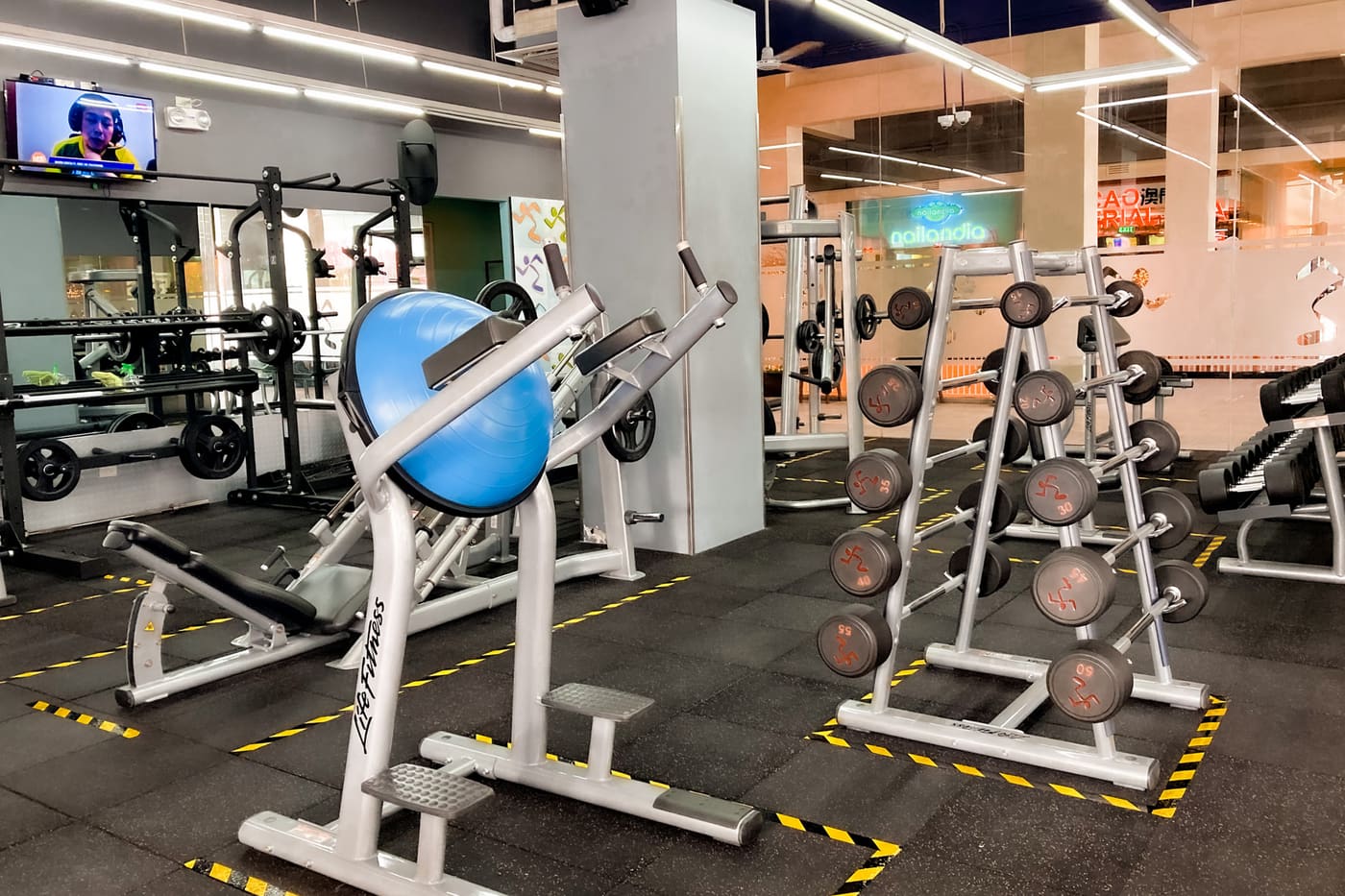
The routine can become the base for a longer plan, such as the one in the best strength training plan for beginners.
Choosing your first weights
Start lighter than you think you need. Do a set and see how it feels. If you could have done many more reps than planned, go up next set. If you struggled by the middle of the set, go down. Finding the right weight usually takes two or three sessions, and that is expected. Stop a set when your form starts to slip, not when you run out of energy.
Gym etiquette that keeps things easy
You do not need to memorize a rulebook, but a few norms help you feel at ease.
- Wipe down equipment after use with the provided spray or wipes.
- Re-rack weights. Return dumbbells and plates to where they belong.
- Share machines. If someone is resting between sets, ask “Mind if I work in?” and alternate.
- Do not camp on equipment while scrolling your phone between sets for long periods.
- Give people space, especially near mirrors and free-weight areas.
- Keep audio in headphones.
- Ask politely. Asking staff or another member how a machine works is normal.
Machines versus free weights
| Option | Pros | Cons |
|---|---|---|
| Machines | Easy to learn, guided path, simple to adjust | Fixed movement may not fit every body, less balance work |
| Dumbbells | Flexible, usable at home later, trains each side separately | More technique to learn |
| Barbells | Efficient for heavy loading, classic lifts like squat and deadlift | Highest learning curve, needs a rack and safety setup |
| Cables | Smooth resistance, many exercise options | Needs setup and attachment choices |
A reasonable path is machines and dumbbells for the first several weeks, then adding barbell lifts once you are comfortable. If you ever want a technique check, a session or two with a qualified personal trainer can be worth it, and you do not need to commit to a long package.
Building confidence over the first month
Aim for two to three visits per week. Here is a rough progression.
- Week 1: Learn the layout and do 1 to 2 sets per exercise. Leave feeling you could do more.
- Week 2: Add a set to each exercise and begin writing down weights and reps.
- Week 3: Increase weight slightly where the last set felt easy.
- Week 4: Review your log. Swap one exercise if something feels uncomfortable and keep the rest.
A friend can help, but a plan helps more. If you have been inactive for a long time, the guide on starting to work out again after a long break offers a careful ramp-up. If the crowd feels like too much, you can practice the same movements at home with the best home workouts without equipment and then bring that confidence to the gym.
Cardio at the gym
Cardio machines are often the most approachable area for beginners. Ten to twenty minutes on a treadmill, bike or elliptical works as a warm-up or a separate session. For weekly targets and intensity, see how much cardio you should do each week. Start easy and let your breathing guide you.
Common beginner mistakes
- Doing too much on day one. Heavy soreness makes the second visit harder.
- Copying advanced routines. What an experienced lifter does is not a beginner plan.
- Skipping the warm-up. A few minutes of easy movement helps.
- Using ego weights. Heavy loads with poor form are a common route to injury.
- Leaving the plan at home. Decisions on the gym floor cause stress.
- Quitting after a bad session. One awkward session does not predict where you will end up.
When to stop and see a clinician
Muscle soreness for a day or two is normal. Stop exercising and get medical help for chest pain or pressure, fainting or near-fainting, severe shortness of breath, dizziness, or an irregular or racing heartbeat. Call emergency services for severe chest pain, especially with sweating, nausea or pain spreading to the arm or jaw. See a clinician for sharp joint pain, an injury with swelling, numbness or tingling, or very dark urine with severe muscle pain after a hard session.
If you have a heart condition, uncontrolled high blood pressure, diabetes, are pregnant, or have not exercised in a long time and have health concerns, speak to a clinician before starting.
Where this comes from
The beginner set, rep and frequency ranges reflect the American College of Sports Medicine’s position stand on resistance training progression for healthy adults. The advice on talking to a clinician follows the Centers for Disease Control and Prevention’s adult physical activity guidance. Etiquette and first-visit tips are common practice rather than formal standards. Gym fees and policies change, so check them with the gym.
This article is general information, not medical advice. Talk to a qualified clinician about your own situation.