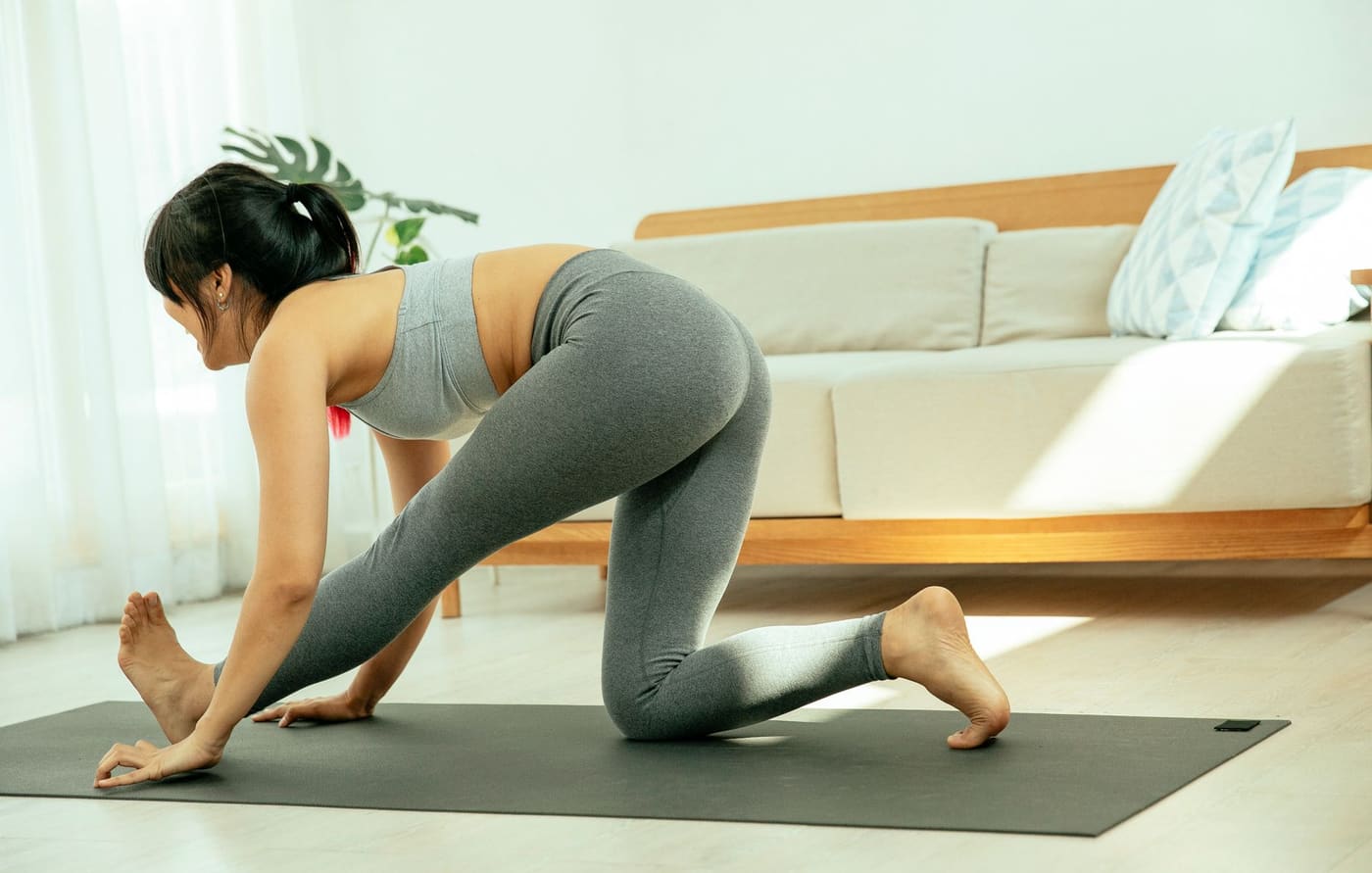
Yes, stretching improves flexibility, but the gains are gradual and depend on doing it regularly. The American College of Sports Medicine advises stretching the major muscle groups on at least two to three days a week, holding static stretches for about 10 to 30 seconds for most adults, and repeating each stretch two to four times. One long session will feel good for a few hours but will not change your range of motion for long.
Much of the confusion comes from lumping together several different things: static stretching, dynamic warm-ups, mobility drills and strength work through a full range of motion. They do different jobs. This guide separates them and shows a simple weekly routine. It is general information, so check with a clinician first if you have a joint condition, recent injury or surgery, or are pregnant.
What flexibility is
Flexibility is the available range of motion at a joint. It depends on muscles, tendons, joint structure and your nervous system. The last one matters more than most people expect. Research on stretching suggests that much of the early improvement comes from greater tolerance of the stretched position, meaning you can go further before your body signals you to stop, rather than from the muscle becoming physically longer.
Joint structure sets hard limits. The shape of your hip socket, for example, affects how far your leg can rotate or lift. That is why two people can train the same way and end up with different results, and why chasing a position your skeleton does not allow is not useful.
How fast does stretching work
Regular stretching produces measurable gains in range of motion. Most people notice a change after a few weeks of consistent practice, and larger changes can follow over a couple of months. There is no exact timetable, and individual results vary. The gains tend to fade if you stop, though gradually.
A single session can give a temporary increase in range that lasts minutes to a few hours. Lasting change needs repetition over weeks, and eventually progress levels off at the limit set by your joint structure and how often you keep going. If you want to touch your toes more comfortably or sit in a deeper squat, that timeline is realistic. A full split in two weeks is not.
Types of stretching compared
| Type | What it looks like | Best use |
|---|---|---|
| Static | Hold a position for 10 to 30 seconds or more | Improving range over time, cooldowns |
| Dynamic | Controlled movement through range, such as leg swings | Warm-ups before training |
| PNF (contract-relax) | Stretch, gently push against resistance, then relax deeper | Short-term range gains, usually with a partner or trained coach |
| Loaded stretching | A strength exercise taken through a deep range, such as a deep goblet squat | Building strength and mobility together |
| Foam rolling | Slow pressure on muscles | Short-term feel-good and temporary range increase |
Static stretching is the most studied approach for long-term flexibility. Dynamic stretching is the more common choice right before a workout, because long static holds immediately before explosive efforts like sprinting or jumping have been linked to a small, short-lived drop in performance in some studies. The effect is small and mainly applies to long holds, so brief stretches rarely matter.
How much and how often
There is no single magic number, but the ACSM guidance gives a reasonable starting point.
- Frequency: At least 2 to 3 days a week for the muscle groups you want to improve. Daily is fine at moderate intensity, and the ACSM notes greater gains with daily practice.
- Hold time: About 10 to 30 seconds per static stretch for most adults. The ACSM suggests 30 to 60 seconds may suit older adults. Beginners can start at 15 to 20 seconds.
- Repetitions: Two to four holds per stretch, aiming for about a minute of total stretching per muscle group.
- Intensity: Move to the point of mild tension or slight discomfort. It should never be sharp or painful.
- Breathing: Breathe slowly. Holding your breath tends to tighten you up.
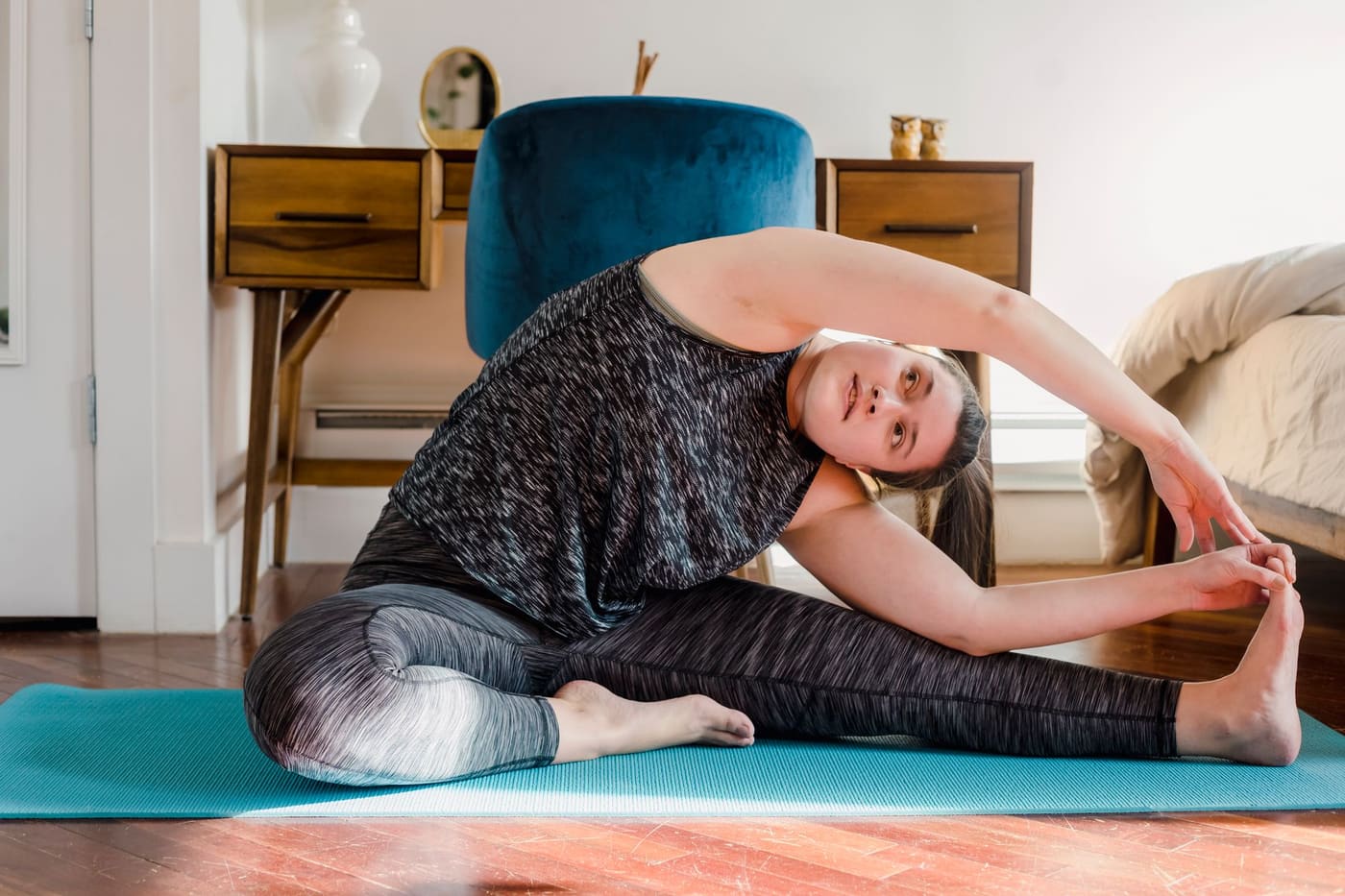
A short 10 to 15 minute routine done a few days a week usually produces better results than a single long session. The point is to make it small enough to repeat.
A simple 10-minute routine
Do this after a workout or after a few minutes of walking, when muscles are warm. Hold each stretch for about 20 to 30 seconds and repeat twice.
- Hip flexor stretch: Kneel on one knee, tuck your pelvis slightly and shift forward.
- Hamstring stretch: Sit or stand with one heel forward and hinge at the hips with a flat back.
- Calf stretch: Press the heel of a back leg into the floor with your hands on a wall.
- Chest stretch: Place one forearm on a door frame and rotate gently away.
- Upper-back extension: Sit on a chair, hands behind your head, and extend over the chair back.
- Child’s pose or a deep squat hold: Settle into the position for 30 seconds or so.
This covers areas that commonly feel tight in people who sit a lot: hips, hamstrings, calves, chest and upper back. If any position pinches the knee or lower back, skip it or use a gentler version.
Mobility work versus stretching
Mobility is the ability to control a joint through its range. Stretching improves passive range, meaning how far something can be moved or held. Mobility work adds strength and control at the end of that range. For most people the best mix is both: after stretching the hip, practice controlled leg raises or a deep squat so your body can use the new range.
Strength training through a full range of motion can also improve flexibility. Some research comparing it with static stretching has found similar gains in range, which helps if you are short on time. The best strength training plan for beginners uses squats and Romanian deadlifts that train range and strength together.
Warm up first. Stretching cold muscles hard is not a good idea, and five minutes of walking, cycling or light movement beforehand makes stretches feel easier. Save the long holds for after exercise or after warming up.
Does stretching prevent injury or soreness
The evidence here is modest. Stretching before exercise has not been shown to reliably prevent injuries, and stretching after exercise has at most a small effect on soreness. Warming up with movements similar to the session and building load gradually probably matter more.
Stretching can make you feel looser and may help with comfort in stiff areas, but it is not a treatment for persistent pain. A clinician or physical therapist can assess the cause of pain that keeps coming back. If stiffness follows time off, the guide on starting to work out again after a long break covers a gradual return.
Common mistakes
- Bouncing. Hold steady positions instead of bouncing.
- Stretching into sharp pain. Discomfort is fine, sharp or pinching pain is a signal to back off.
- Only stretching when sore. Gains come from regular practice.
- Ignoring weak areas. Sometimes a muscle feels tight because it is weak or overworked, and strengthening helps more.
- Comparing yourself to others. Joint structure differs, and your own progress is the useful comparison.
Stretching pairs well with other activity. The article on how much cardio you should do each week shows how to fit movement and recovery into a week.
When to see a clinician
Normal stretching feels like tension. Stop and see a clinician for sharp or shooting pain, pain that lasts more than a few days after stretching, a joint that locks or gives way, numbness or tingling that spreads or does not go away, swelling, or a sudden loss of range after a fall or injury. Seek urgent care for severe pain after trauma, visible deformity, inability to bear weight or sudden weakness in a limb. Stop exercising and get medical help for chest pain, fainting, severe breathlessness or dizziness.
Ask a professional first if you have recently had surgery, have a joint condition such as hypermobility, have osteoporosis, or are pregnant.
For a simple routine to tick through, use the warm-up and cool-down checklist.
Where this comes from
The frequency, hold-time and repetition figures come from the American College of Sports Medicine’s published flexibility exercise recommendations for healthy adults. The explanations of stretch tolerance, warm-up effects and the modest evidence on injury prevention reflect general sports-science reviews. Timelines for gains vary between people, so treat them as typical rather than exact. Guidance is revised over time, so check the current position at the ACSM.
This article is general information, not medical advice. Talk to a qualified clinician about your own situation.